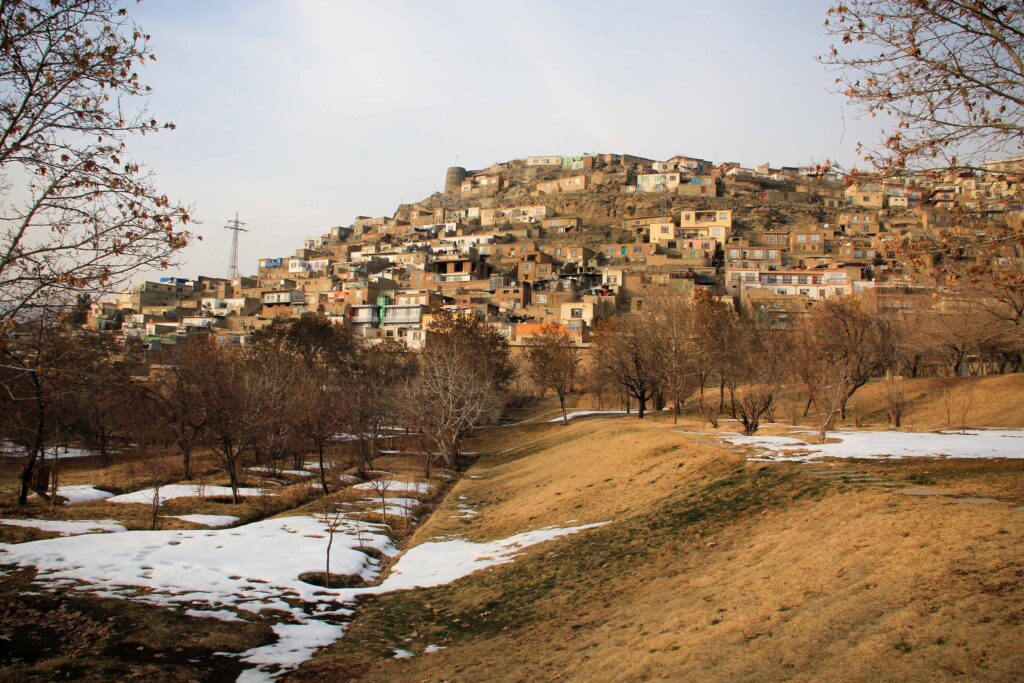
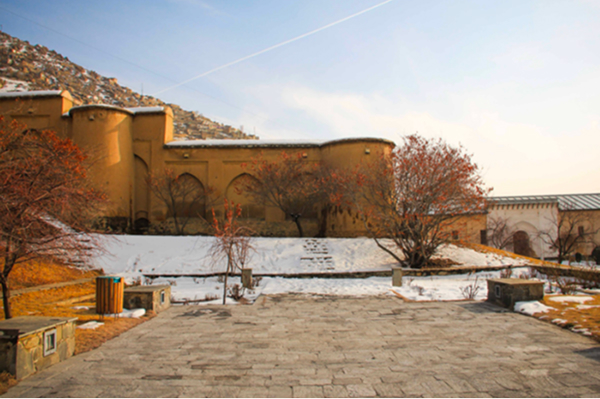
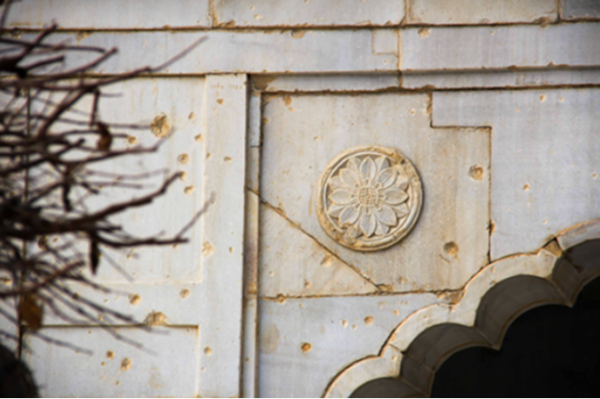
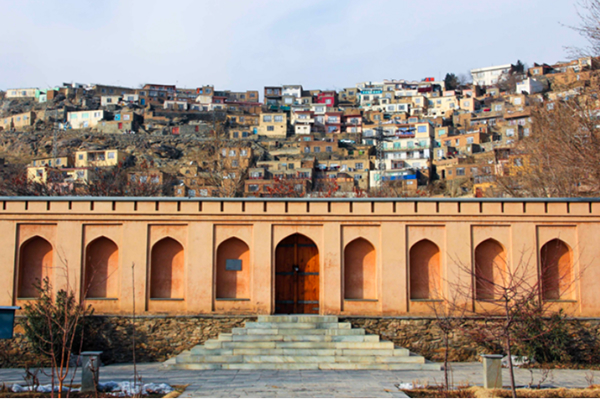
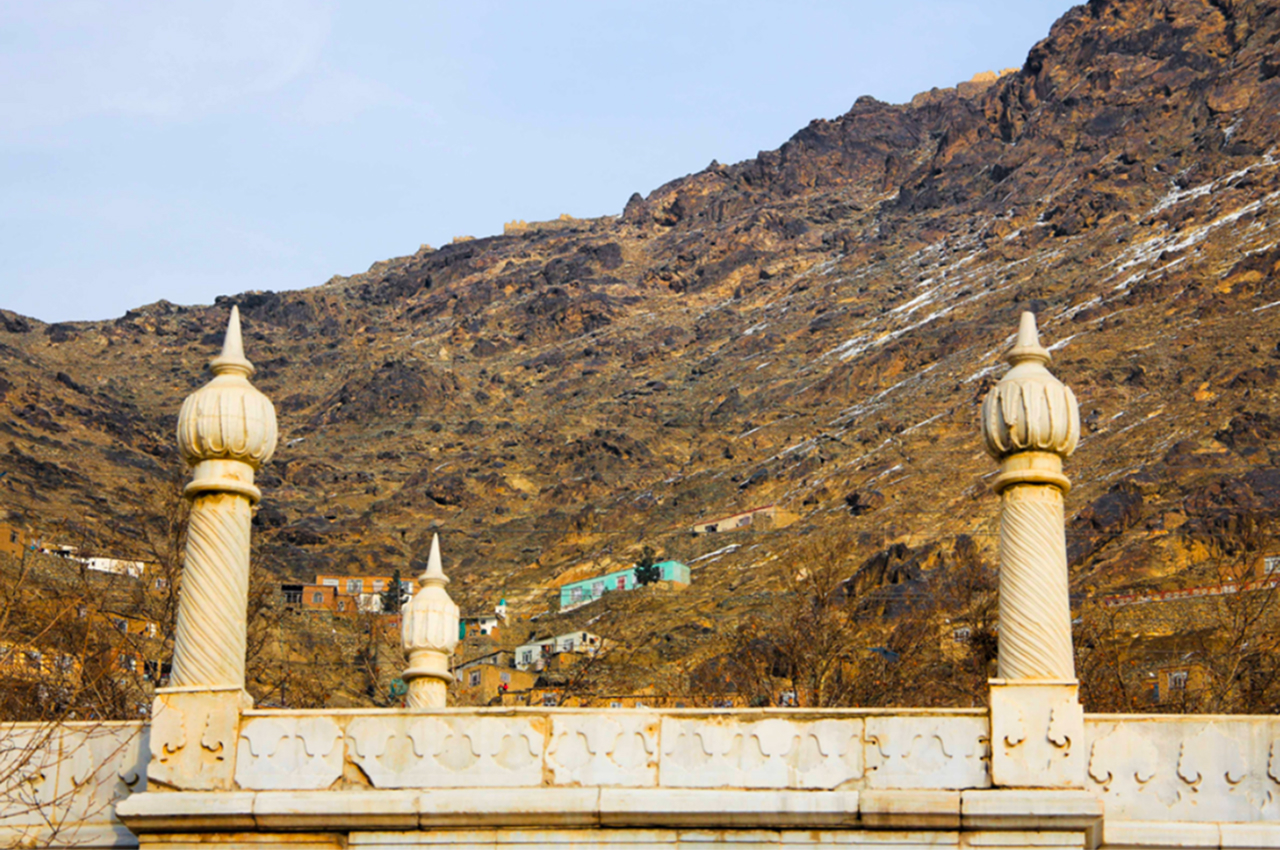
On the south-western foothills of the Sher Darwaza mountain in Kabul lies Bagh-e Babur, a 500-year-old garden. In 1504, Babur – the first emperor of the Mughal Empire – chose this location for his garden because of its admirable climate and commanding view over the city.
Babur was exiled from his ancestral home- land of Fergana (modern-day Uzbekistan) at the age of 14, taking refuge with his uncle Sultan Mahmud Khan in Tashkent. At one of the lowest points in his exile Babur wrote in his memoirs, The Baburnama, “my heart has found no joy in this exiled state” – a sentiment that still reso- nates deeply with those forced out of their homeland. But when Babur captured Kabul in 1504, it was love at first sight. In this city – now governed by explosions and choked by pollution – he finally found a place to call home.
The garden extends across 15 stepped terraces, split by a series of watercourses and divided longitudinally by a central avenue. In its full splendour trees, were laden with fruit; trees blossomed and flowers were woven into symmetrical patterns; fountains erupted with water and the gardens evoked Paradise.
At least the Gardens of Babur have been spared the fate of many others across Kabul – at Bagh-e Bala, trees were cut down, it was partially flattened and a wedding hall and petrol station will be built in its place; Shahr-e Now Park will be turned into a business centre, and Bagh-e Zanana (Women’s Park) has been converted into the offices for The Ministry for the Propagation of Virtue and the Prevention of Vice.
Babur described Kabul as his “lucky piece” and commanded that none should covet it.
He could not have imagined what would become of his beloved city.