The film that still resonates in contemporary Sri Lanka, half a century after it was made
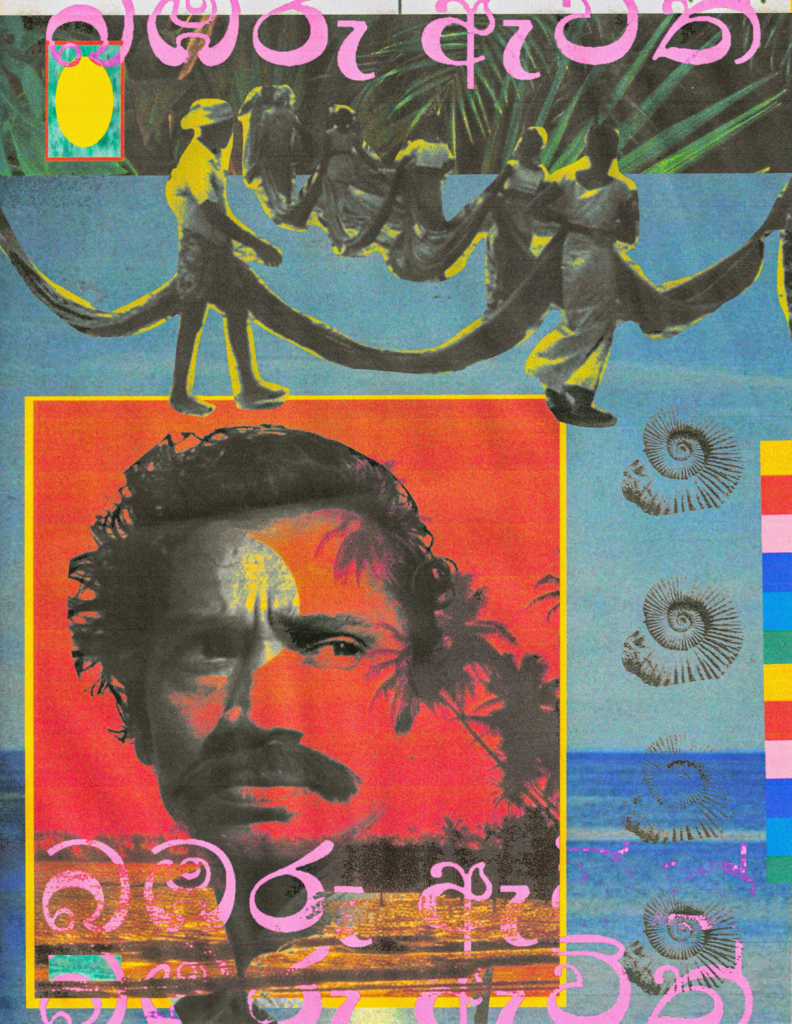
Bambaru Awith is making waves again. This piece is an attempt to critically revisit the film 45 years after its release — a film widely regarded as one of the greatest in Sri Lankan cinema history, and a turning point in a cinematic revolution led by the late Dharmasena Pathiraja, one of our most influential film thinkers.
Dharmasena Pathiraja
Renowned Sri Lankan filmmaker and intellectual who pioneered socially
conscious cinema.
A new high definition version of Bambaru Awith was recently produced at great expense and screened at venues both in Sri Lanka and abroad. It was honoured at the prestigious Cannes Film Festival in France as a landmark in the history of cinema. When a version of the restored film suddenly re-appeared on YouTube it quickly gained thousands of views.
Originally released in 1978, Bambaru Awith is described as the work of a group of seasoned artists including, but not limited to, Cyril Wickramage, Dharmasena Pathiraja (1943-2018), Wimal Kumar de Costa (1948-2016), Amarasiri Kalansuriya (1940-2023), W. Jayasiri (1947-2024), Malini Fonseka (1947-May 2025), and Daya Tennakoon (1941-2020). The artists “camped out” on the beaches of Kalpitiya, and the film was born with the creative energy of a young generation that lived simply—sleeping under the stars, singing songs, eating dried fish, and soaking up the grit of life on the coast.
Cyril Wickramage
An actor and director in Sri Lankan cinema, theatre, and television, best known for his role in Bambaru Awith.
The film explores how capitalism invades a quiet fishing village in Kalpitiya. It shows how traders begin to dismantle the traditional systems the fishermen have relied on for generations, replacing them with structures rooted in profit. In the process, it’s not just fishermen’s livelihoods that are eroded, but their lives themselves. The film also examines how this patriarchal community attempts to resist these changes. Eventually, the tensions erupt into violence, leading to the arrival of the police—a state force the village had never experienced before. This is the heart of the story.
Vijaya Kumaratunga (1945-1988) plays Victor, a man from a wealthy business family who brings capital into the village. He arrives with his friend Sanath (Amarasiri Kalansuriya). A third character, Francis (Daya Tennakoon), is a local who has grown to resent the village’s way of life, and he begins working with Victor and Sanath.
Vijaya Kumaratunga
An actor, singer, politician, and one of the most iconic figures in Sri Lankan cinema. He was assassinated in 1988 and married to Chandrika Bandaranaike Kumaratunga, who later became the country’s first female executive president.

Prof. Sucharitha Gamlath
A respected literary critic and scholar in Sri Lanka, known for his sharp political, social, and cultural commentary, especially in the 1970s and ’80s.

Cinnamon Gardens
is also known as Colombo 7, widely used as a symbol of upper-class life in Sri Lanka
In his review at the time, Prof. Sucharitha Gamlath (1934-2013) wrote: “When Victor, armed with capital, exploits the fishermen on a massive scale, he and the village become two ’irreconcilable’ forces.”
Victor doesn’t just want to invest in the village’s fish trade—he wants to dominate it, and keeps himself separate from the villagers. Even when he’s drinking, he prefers the company of Sanath, an outsider, rather than the local ally Francis. Cinematically, this is captured through striking visual imagery—Francis is often shown speaking to Victor through a window, never quite allowed inside.
Victor’s room is styled in a way that reflects his class: Western whisky, English music, expensive artwork. At one point, Sanath goes so far as to remark, “This is like a room in Cinnamon Gardens,” referencing the elite Colombo 7 neighbourhood known for its wealth.
Eventually Victor crosses paths with Helen (Malini Fonseka), a young woman from the village, who is unofficially engaged to Cyril, a local fisherman. Early in the film we see tender, quiet moments between Helen and Cyril—her shy smile when he says, “I will marry you,” and the warmth in her face.
Malini Fonseka
One of Sri Lanka’s most celebrated actresses, often referred to as the ‘Queen of Sinhala Cinema.’ She died as Translator was going to press. Thousands waited to pay their last respects as her body lay in state at the National Film Corporation, ahead of her funeral.
“Victor begins by definitively breaking the genuine love between Helen and Cyril. Tired of the monotonous life of suffering and sorrow in the village, Helen boards a man-plane named ‘Victor’, with the intention of moving to the city in search of happiness and fame,” wrote Prof. Sucharitha Gamlath at the time.
Helen is drawn to Victor—a tall, fair, wealthy young man from the city. Naturally, this leaves the humble fisherman Cyril anxious and heartbroken. Though the film leans heavily into its political themes, it keeps the audience engaged with this engaging love triangle at its core.
While Cyril is the emotional rival in Helen and Victor’s personal story, the real antagonist in the broader political narrative is Anton—a thuggish fisherman played brilliantly by Joe Abeywickrama (1927-2011). Before Victor entered the village with his capital, Anton had already established himself as a local power, monopolising much of the fish trade. “He has a female companion on every island,” Francis says when introducing Anton to Victor.
Man-plane
The Sinhala word “yanaya” translates to plane but can also be used for other modes of transport

Joe Abeywickrama
A renowned actor in Sri Lankan cinema, theatre, and television. Initially celebrated for his comedic roles in the early 1950s, he later became one of the greatest actors in Sinhala cinema.

Toddy
Known as “Raa” (රා) in the Sinhala language, toddy is an alcoholic beverage made from the sap of several types of palm trees, including coconut and palmyra.
Anton pays fishermen meagre sums for their catch—not necessarily out of cruelty, but because he doesn’t have external capital. Unlike Victor, he isn’t an investor; he’s one of them. Yet, under Anton’s rule, the sense of collective trade and community is already eroding, and when Victor arrives, he finishes the job, making the trade entirely his.
Among the characters, only Weerasena grasps the true significance of Victor’s arrival. A friend of Victor and Sanath, he represents the middle-class leftist intellectual—bookish, long-haired, and full of romantic ideals. He analyses society from a comfortable distance but doesn’t have the grounding
to organise real change. He’s the kind of leftist who critiques the capitalist system while still socialising with those who uphold it, who visits the oppressed only occasionally to taste a bit of dried fish, bathe in the sea, or sip some toddy—just to say he’s ‘been there.’ He is, in essence, a symbol of the broader leftist movement in Sri Lanka.
“I feel a real freedom here. A deeply balanced life. It’s like the beginning of civilisation. And you think yourself above them.” he says to Victor. “You’re stealing not only their labour but also their private lives,” he adds, directly criticising Victor’s relationship with Helen.
Weerasena describes the village as a kind of “communist state” where people live in relative equality. But the village under Anton is in fact no utopia—there is exploitation, and there is cruelty. Take Francis, for example. Although timid on the surface, he carries emotional wounds of his own. The woman he loved has become just one more of Anton’s many women, and so he welcomes Victor, seeing him as a force that might finally challenge Anton’s dominance.

“I t is clear that what looked like a chaotic, patternless process is actually a well-structured one, manipulated by capital,” Prof. Sucharitha Gamlath wrote in his review.
Analysis of this kind appeared in both left-wing journals and mainstream media at the time. However, some critics felt the film didn’t portray the class conflict as explicitly as they expected. Kumudu Kusum Kumara noted: “The film begins as a class conflict between the fishing community and the traders, and even between traders themselves. But the director fails to fully explore the class struggle, eventually slipping into a personal love triangle.”
Kumudu Kusum Kumara
A Sri Lankan academic and social critic who often wrote about politics, education, and class issues.
Yet, the class struggle that is in the film does reflect a broader reality—the political and economic landscape of Sri Lanka at the time. Victor represents the onset of free-market capitalism introduced by then-President J.R. Jayewardene in the 1970s. The police force that arrives later symbolises the emergence of state repression, and Weerasena embodies the well-meaning but ineffectual left—like the Lanka Sama Samaja Party and the Communist Movement—which foresaw the crisis but failed to stop it.
J.R. Jayewardene
Sri Lanka’s first executive President, who introduced sweeping free-market reforms in the late 1970s. His presidency saw the start of Sri Lanka’s civil war and a Marxist insurrection led by the Janatha Vimukthi Peramuna (JVP), which is now Sri Lanka’s ruling party.

Lanka Sama Samaja Party
Sri Lanka’s oldest leftist party, once influential in shaping the country’s early socialist politics.
Now, nearly five decades later, we’re watching Bambaru Awith in a country where the free-market economy that was just taking root in 1978 has fully taken over. It’s no longer just Victor. Dozens of ‘Victors’ have seized control of everything—from fishing and agriculture to education and healthcare. Even essential services like communication, energy, and fuel are being handed over to private or foreign companies.
When we revisit this film today, it’s important to ask what Pathiraja was really trying to say—without spelling everything out. The film doesn’t show class conflict in a clean, textbook way. Instead, it presents how a fragile but functioning village life—flawed though it may have been—was broken by capital, and how that opened the door for militarisation, policing, and repression. The leftists, meanwhile, were caught off guard—powerless, and caught up in their own rhetoric.
Pathiraja didn’t write these characters to fit some idealistic leftist formula. He allowed them to live, breathe, and contradict themselves. And that’s why, even today, the arguments made by the left often fall short. They continue to struggle, not because their ideology is wrong, but because they still don’t know how to land a real blow against the forces they oppose.
Take Elon Musk or Bill Gates, for example—figures widely viewed as enemies by the global Left. Among much of the general public, however, they are seen as visionaries, even heroes. Bill Gates in particular speaks with a disarming innocence that wins trust. The same is true in Sri Lanka. Entrepreneurs who exploit labour and financially squeeze farmers or fishermen are often admired. In fact, some of them are genuinely kind people with good intentions. This means identifying heroes and villains in stories about capitalism is not as simple as it seems.
his is where the most compelling and subtle achievement of Bambaru Awith lies—in the way it chooses, frames, and ultimately questions who the heroes and villains are.
Throughout the film, Victor is presented as the hero. We see the world through his eyes, from inside his mind. It’s Vijaya Kumaratunga—Sinhala cinema’s beloved hero
—playing Victor. It’s a classic Vijaya–Malini love story. Naturally, Joe Abeywickrama, a veteran of many villainous roles, plays Anton, bringing his familiar traits to this one too. It’s a simple, digestible structure meant for the general audience buying tickets and sitting down to watch a love story unfold.
He appears as a hero to the villagers. Indeed, a hero to the viewers. And this is exactly how capitalism moves in—charming, dignified, seemingly progressive. Even now, we see state institutions being privatised by painting them as inefficient and unsalvageable—just as Anton’s fishing village was depicted. New investors arrive like saviours, much like Victor. This is the same heroic mask that the open economy wore when it entered Sri Lanka in the late 1970s.
There have been many plays, novels, films, and teledramas since then that depict capitalism’s encroachment onto village life. In most of them, the capitalist is portrayed in an exaggerated form: greedy, ugly, and abusive—particularly to village women. But Pathiraja breaks that stereotype. Victor offers Helen sincere love. There’s no coercion. And Helen is genuinely drawn to him.
Victor doesn’t arrive with the intention of destroying lives, exploiting labour, or militarising the village. He’s even disturbed by the violence that ensues. In one scene, where the villagers confront him, he instinctively brings in the army and positions himself behind it, without seeing it as something wrong.
Zooming out, we see that the capitalists don’t see themselves as doing anything wrong, but are often depicted as ’good people’. In fact, from the perspective of the capitalist elite, Victor is doing everything right. Over the course of the film Pathiraja brings this contradiction into sharp focus.
At the beginning of the film, for the average viewer, the romantic rival Cyril is the antagonist. And Anton, who fuels Cyril’s resentment, is the larger villain. But by the end of the film, they suffer brutal fates that shake the viewer. That emotional shock draws us into the real political terrain Pathiraja wants us to engage with. Watching the film a second, third, or hundredth time, one cannot help but start seeing Anton as a tragic, perhaps heroic figure—and start questioning whether Victor is really innocent.
But human relationships, as the film shows, are far too complex to fit neatly into a leftist critique. Society cannot be organised into formulas like “the rich are like this” or “the poor are like that.” Evil doesn’t reside in individuals, it resides in ‘processes’. We should not hate Victor. We should hate the conditions created by his arrival—conditions he himself does not fully understand.
Victor isn’t the only one being accused. Another important layer to the film is: what does Anton truly represent? His outrage isn’t directed at the fundamental issue of capitalism taking over the village. He’s focused on the relationship between Helen and Victor. His resistance is reactive, emotional, and personal. He doesn’t have the analytical tools to grasp why he really hates Victor, or what exactly is being taken away from the village.
Similarly, Sri Lanka was ill-equipped to resist the liberalisation of the economy in the 1970s and the authoritarianism that came with it. Instead of unified, systemic resistance, both North and South sank into nationalist and sometimes racist politics.
Leftists like Weerasena, or the old Lanka Sama Samaja Party and Communist Party intellectuals, lived in ideological bubbles. They had the theory, but no meaningful connection to the ground. Meanwhile, rural youth movements like the Patriotic People’s Movement (Deshapremi Janatha Vyaparaya) jumped into activism without a clear ideological footing. Most of these conflicts were meaningless.
Communist Party
A long-standing leftist party in Sri Lanka, active since the 1940s. Once influential, but gradually lost ground in mainstream politics after the country opened up its economy.

Patriotic People’s Movement
A militant group allegedly linked to the Janatha Vimukthi Peramuna during its armed insurrection in the late 1980s.
They split hairs over Trotskyism, Leninism, nationalism, internationalism, Maoism, while the real problem marched on. And while this happened, many leftists were drinking whisky with the very capitalists they claimed to oppose. They shared political alliances and sat in Parliament together. The youth, in contrast, were left to fight—without guidance and alone—as the state became more and more repressive.
At the end of the film, when Weerasena tries to give a speech to the villagers, no one stays to listen. Only a cow remains. Everyone else is gone. That moment speaks volumes.
Yes—Victor’s arrival triggers the village’s downfall. But every character contributes to that destruction, some knowingly, most unknowingly. That’s why this film doesn’t just show the mess created by capitalism, but also forces us to confront how the real-world works—a world where villainy and heroism cannot be neatly divided.