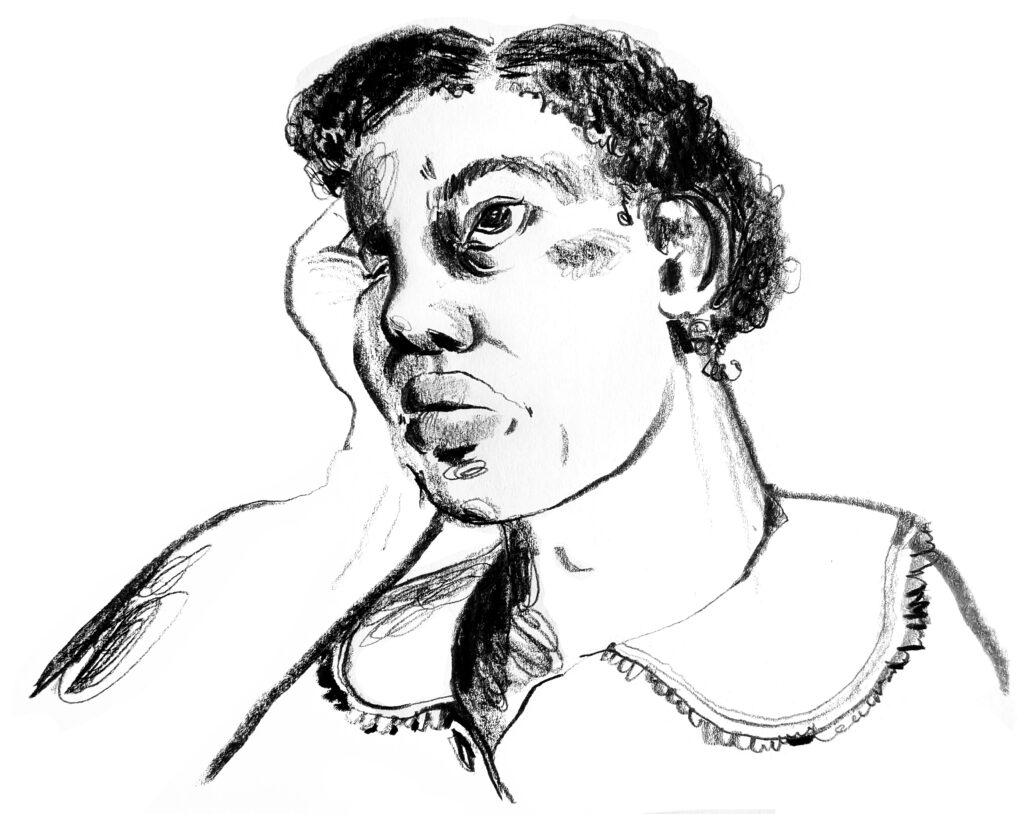
A journalist set out to profile the women trolleybus drivers of Bishkek. What she found was a means of transport – and way of life – on the brink of collapse
A report in the Polish magazine Pismo begins as a portrait of a single female trolleybus driver in Kyrgyzstan and becomes something much bigger. This is a story about not only the dismantling of an urban transport system but also the continued aftershocks of the collapse of the Soviet Union.
Journalist Emilia Sułek follows Guljan Kurbanova, a 48-year-old in Bishkek, who is easy to spot in her high-visibility vest as she drives her trolley through the streets of the Central Asian capital. Like many Kyrgyz citizens, Kurbanova spent years working abroad – in her case in Moscow – before returning home, where she retrained as a transport worker. Driving had long been her ambition, despite resistance from male relatives. Eventually she enrolled in a Bishkek technical school, joining a profession in which women are in fact unusually well represented.
When Sułek visits the school, she is told in no uncertain terms that trolleybus driving is not thought of as “women’s work” because it is easy or automatic. One teacher explains: “Women in Kyrgyzstan are ambitious and have always wanted equal rights.” And in the USSR it was women who, in the teacher’s words, “colonised” trolleybuses.
The training itself is demanding. Students – often juggling jobs and family responsibilities – learn electrical engineering, safety procedures, and the mechanics of vehicles that must be controlled both on the road and via overhead power lines. Whatever the demands, though, this is stable employment in a country where jobs are scarce.
Or at least it was. By the time Sułek starts reporting, rumours are already circulating that the city is planning to dismantle the entire trolleybus network. Within weeks, those fears prove justified.
Bishkek’s authorities announce the gradual closure of all lines, arguing that trolleybuses are outdated and too expensive to maintain. Passenger numbers have declined, officials say, and the system covers only a small portion of the rapidly expanding city.
Behind these controversial arguments lies a broader transformation.
The practical maintenance of the trolleybus network relied on cooperation between former Soviet Republics, Sułek points out.
She writes: “Trolza, a Russian trolleybus manufacturer from Saratov [in southern Russia], declared bankruptcy in 2017 … Electronics were once purchased in Kharkiv, Ukraine. An entire empire contributed to the success of the trolleybus. But that empire is gone; a full-scale war is raging in Ukraine, so Bishkek won’t buy anything from Kharkiv for now. And the rolling stock is aging.”
Elena Sadunova, one of the final students in the technical school, says that shift is not only practical.
“The USSR had engineers, technology, and money, but above all, a goal: to create transportation solutions that serve people,” she tells the reporter. “Today, the government doesn’t care about public transportation. Let everyone take their own children to school, commute to work. The car lobby is behind it. This is what capitalism looks like.”
City authorities present electric buses as the future. But critics are unconvinced. Activists argue that replacing trolleybuses rather than modernising them is short-sighted, especially in a city struggling with air pollution. They also question the transparency of the decision-making process.
“The situation is murky,” says one activist. “The city is taking out a loan from a Chinese bank to purchase buses manufactured in China. The bank is paying for the expert’s analysis of why the fleet replacement is necessary. This should alarm everyone. Such an analysis can’t be neutral, after all.”
Fear of dependence on China runs deep in Kyrgyzstan, according to the report. Their shared border stretches over a thousand kilometers, and Bishkek’s public debt to Beijing reached $4 billion at the beginning of 2024.
But protests against these electric buses from China are hampered by political repression at home. Even among transport workers, action is limited by fear of losing what are now precarious jobs.
Meanwhile, the dismantling proceeds – sometimes literally overnight, when crews cut cables. The longer the journalist stays in the city, the greater the sense of inevitability grows: even those who oppose the closures start to concede the system may be beyond saving.
Against this political backdrop, the article returns to the drivers themselves. Women like Irina, with three decades of experience, who cannot imagine another career; or Begimai, who takes pride in the discipline and independence the job offers. They describe trolleybus driving as skilled work requiring patience, composure, and responsibility for passengers’ safety.
By the end of the report, the transition is complete. Bishkek’s last trolleybus line is shut down. Workers disperse: some find new roles, others struggle. Teachers from the technical school relocate. A Soviet-era, female-dominated profession reaches the end of the line.

The original article ‘Trolejbus w Kirgistanie to kobieca sprawa’ by Emilia Sułek was first published in Polish on 3 December, 2025.
It is available here.
Pismo is a monthly magazine focused on long-form reporting that was first published in Poland in 2018.